Should You Repair a Popcorn Ceiling or Retexture It
Most popcorn ceiling calls start with one damaged spot, and the right answer depends on how much of the ceiling is still in good shape.
October 21, 2026 · 4 min read
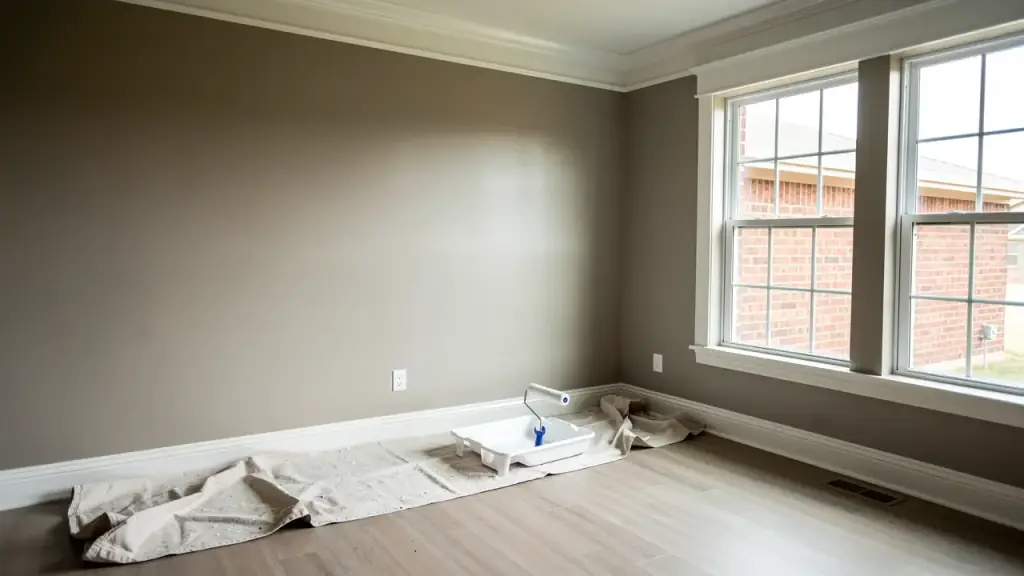
What a popcorn ceiling actually is
A popcorn ceiling is a sprayed-on texture with a rough, bumpy surface made of small clumps that dry hard on the drywall. Builders used it for years because it hides imperfections in the drywall underneath and goes on faster than a smooth, hand-finished ceiling. If your home has one, you probably didn't choose it. You inherited it, and you've been looking at it ever since.
The same surface that was quick to install is awkward to live with. The bumps hold dust and cobwebs, they throw tiny shadows when sunlight comes in at an angle, and they crumble if a ladder, a fan or a moving box rubs against them. That's why most phone calls about popcorn ceilings start with damage, not with style.
When a repair is enough
A repair makes sense when the problem is confined to one area and the rest of the ceiling is sound. The texture is still firmly attached, the color is still even, and you simply want the bad spot to go away. Common situations look like this:
- A stain left by an old leak that has been fixed and is completely dry
- A bare patch left behind after a light fixture or ceiling fan was removed
- A section knocked loose by a ladder, a move or a repair above the ceiling
- A corner where the texture has flaked off over time
Popcorn ceiling repair usually means fixing the damaged area, building the texture back up so it blends, and then painting. Johnson's Painting & Roofing lists popcorn ceiling repair, painted, as one of its texture services, so the repair and the paint can be handled together instead of by two different people.
The paint step matters more than it sounds. A repaired spot that's a slightly different white than the surrounding ceiling will glow like a patch every time afternoon light crosses the room. In many cases the cleanest result comes from painting the whole ceiling once the repair has dried, so the color is even from wall to wall.
A stain is a symptom, not the problem
If the ceiling has a brown ring or a sagging spot, the first question isn't about texture at all. It's about where the water came from. A roof leak, a plumbing line above the ceiling and an air conditioner drain pan can all leave the same mark, and none of them gets fixed by paint.
Fresh texture over a ceiling that's still damp will usually stain through again. Before any cosmetic work, make sure the source is repaired and the area is dry to the touch. If the leak traces back to the roof, that's a conversation about the roof first, and the ceiling second. Starting in the right order saves you from paying to fix the same spot twice.
When retexturing makes more sense
Retexturing means replacing the popcorn with a different finish. Johnson's lists orange peel texture and custom texture among its services, and either one gives you a flatter surface that's easier to wipe and doesn't shed. It tends to be the better choice in a few situations.
- The damage is spread across several rooms instead of one spot
- Earlier repairs never matched, and the ceiling looks patched in many places
- The room gets strong window light that makes every bump stand out
- You're already repainting the whole room and want the ceiling to look current
Removal is the messy part. Scraping popcorn off a ceiling sends fine material into the air, so furniture, floors and anything left in the room need to be covered or moved. One careful note: older textured ceilings can contain materials that need testing before they are disturbed, so ask before anyone scrapes.
Once the old texture is off, the drywall underneath often needs some finishing work before a new texture goes on. Seams, nail heads and small gouges that the popcorn used to hide will show up under a lighter texture, so a good job includes a look at the bare surface before anything is sprayed.
Questions to settle at a free quote
A ceiling job goes more smoothly when you and the painter agree on a few things up front. Walk through the room together and talk about these points before any work is scheduled.
- Is the damage limited to one spot, or is the texture failing across the ceiling?
- Has the cause of any stain been found and fixed, and is the area dry?
- If you retexture, which finish do you want: orange peel, something custom or a smooth look?
- Will the whole ceiling be repainted so the color matches edge to edge?
- How will floors and furniture be protected, and who cleans up?
You'll notice that none of these questions is about the cost of a single repair spot versus a full ceiling. That's deliberate. Until someone has actually looked at the ceiling in person, any answer about scope would be a guess, and a guess isn't much use when you're deciding between a patch and a redo.
Get a free quote
If you have a popcorn ceiling in Lawton or Duncan and can't decide between a patch and a fresh texture, the simplest step is to have it looked at. Johnson's Painting & Roofing gives free quotes on every service, and you can reach them at (580) 695-9941. They're open 24 hours, seven days a week, and se habla español. Tell them what the ceiling looks like and where the damage is, and ask them to walk the room with you.
Johnson's Painting & Roofing, (580) 695-9941
Call (580) 695-9941More articles
Why a Wall Patch Shows Through Paint and How Texture Matching Works
A patch can be perfectly smooth and still look wrong, because the eye reads texture and sheen long before it reads color.
Choosing a Roof for a Southwest Oklahoma Home
A roof has to handle sun, wind and storms, so the right material depends on how you want the house to look and how much upkeep you'll accept.